How to Write a Used Car Ad That Actually Sells
A practical guide to writing a used car ad: the title formula, what to put in the description, which photos to use, and the checks to do before you publish.
Knowing how to write a used car ad is mostly about removing doubt. A buyer scrolling Facebook Marketplace, AutoTrader or CarGurus compares your car with dozens of similar ones, and they skip anything that looks vague, incomplete or too good to be true. A good ad answers their first ten questions before they have to message you: what exactly the car is, what it has been through, what is wrong with it, and why the price is fair.
The short version: put the year, make, model, trim and mileage in the title, write a description that covers condition, history, equipment and known faults in that order, lead with a clean front three-quarter photo, and price it against real listings rather than wishful thinking. The rest of this guide shows how to do each step and what to avoid.
Gather everything before you start writing
Writing is much faster when the facts are already on the table. Spend fifteen minutes collecting:
- The VIN and registration details. Serious buyers run a history check, and they will ask for the VIN anyway.
- The service record. Receipts, stamps in the service book, and the dates and mileage of big jobs such as a timing belt, clutch or tires.
- Inspection status. In the UK that means the MOT expiry date; in the US, any recent state inspection or emissions test.
- The exact trim and options. Check the original window sticker, the order sheet or the manufacturer's VIN decoder. "Sport package" means something specific to a buyer who is comparing.
- An honest list of faults. Chips, scratches, a warning light, a noise over bumps. You will need it for the description and the photos.
What title works in search?
A title that works in search carries the facts buyers filter by and one detail that makes them click. Most buyers never search for "nice car". They filter by make and model, then scan titles.
A reliable formula is: year + make + model + trim or engine + mileage + one standout fact.
| Weak title | Strong title |
|---|---|
| Great car, must see!! | 2019 Honda CR-V EX AWD, 48,000 miles, one owner |
| BMW for sale | 2020 BMW 330i xDrive, 36k miles, full dealer service history |
| Cheap reliable runabout | 2016 Toyota Yaris 1.5 Hybrid, 71,000 miles, new tires |
Skip capital letters, exclamation marks and words like "mint" or "immaculate". They add nothing a buyer can check, and they make the ad look like every other ad.
Structure the description so it is easy to scan
People read ads on their phones, often in a queue or on a break. Short paragraphs in a predictable order work better than a single block of text. Use this structure:
- One-line summary. "2019 Honda CR-V EX AWD in silver, 48,000 miles, one owner from new, selling because we need a seven-seater."
- Condition. Exterior, interior, tires, and anything that needs attention soon. Be specific: "small scratch on the rear bumper, pictured" is more reassuring than "a few marks".
- History. Owners, service record, recent work with dates and mileage, and whether the car has ever been in an accident.
- Equipment. The options a buyer would actually pay for: heated seats, adaptive cruise, tow bar, Apple CarPlay. Leave out standard features every car has.
- Practical details. Where the car is, when it can be viewed, whether you accept a pre-purchase inspection, and how you want to be contacted.
Phrases to avoid
"No timewasters", "first to see will buy" and "price is firm, don't ask" read as defensive and put off the careful buyers you actually want. If the price is firm, say "the price reflects the service history and new tires" instead.
Choose and order the photos
Photos decide whether anyone reads your text at all. Shoot the car clean, in soft daylight, somewhere uncluttered, and put the images in the order a buyer walks around a car:
- Front three-quarter view as the cover photo, because it becomes the thumbnail in search results
- Side profile, rear three-quarter and straight rear
- Dashboard with the mileage visible and no warning lights
- Front seats, rear seats and the trunk
- Wheels and tires, the engine bay, and the service book
- Close-ups of every fault you listed in the description
Photographing the faults feels risky, but it works the other way: a buyer who has seen the scratch in the ad does not use it to negotiate at the viewing.
Add a short vertical video
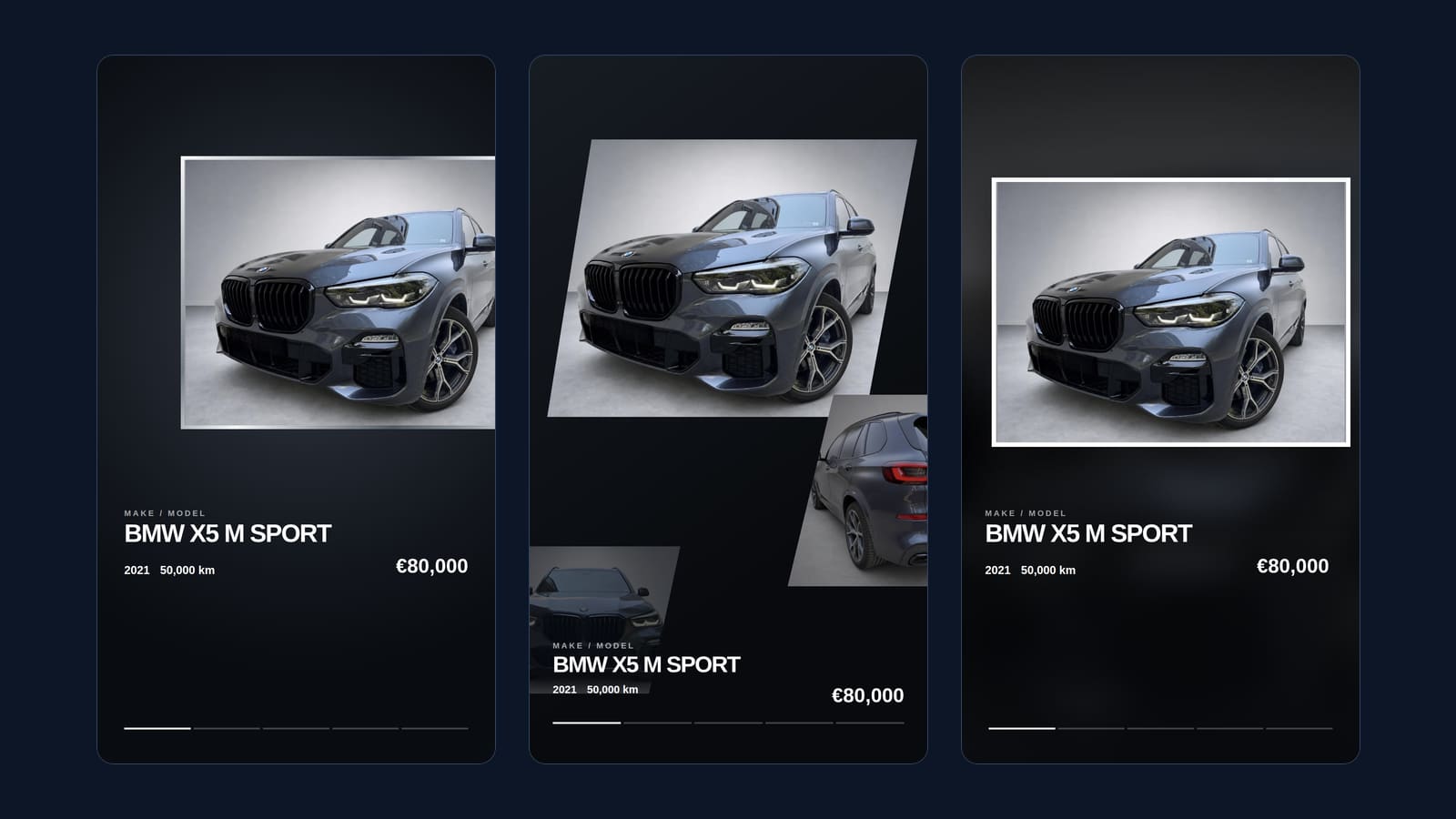
A growing share of buyers browse cars the same way they browse everything else on their phone: vertically, with the sound off. A short video of the car gives them one more reason to stop on your ad, and it is also useful outside the listing itself. You can post it as a Reel or story that links to the ad, or send it to people who message you before they come to a viewing.
It does not have to be a filmed walkaround. A 20-second vertical clip made from five of your best listing photos, with the year, mileage and price on screen, shows the same car the buyer will see in the gallery. Check the current rules of the site you list on, because not every marketplace accepts video uploads, and the ones that do have their own limits.
See how to turn car listing photos into a vertical video for which photos to use, how the on-screen captions are edited, and where to post the file.
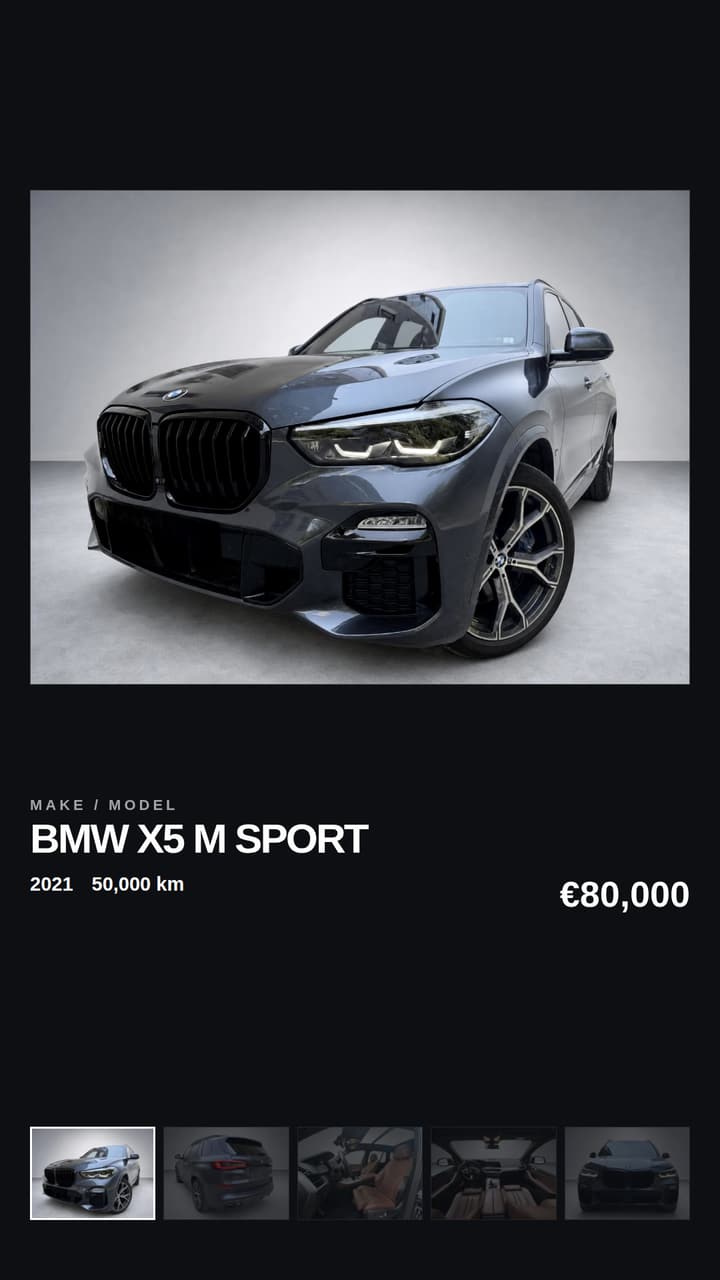
AutoDash does exactly this: upload your photos and choose five, confirm the details, pick a style, and you get a silent 1080×1920 video to download. See how it works.
How do you price it against real listings?
Search your own make, model, year and mileage in your area on two or three sites, and note what similar cars are really listed at, not the highest ones. The price is part of the ad, and buyers judge it within seconds. Price slightly above the level you would accept so there is room to negotiate, and say in the ad whether you are open to offers.
If your car is priced above similar ads, the description has to justify it: lower mileage, a recent major service, better trim, new tires. Buyers accept a higher price when they can see why.
Checklist before you publish
- Title has year, make, model, trim or engine, and mileage
- Description follows summary, condition, history, equipment, practical details
- Every known fault is mentioned and photographed
- Cover photo is a clean front three-quarter view
- Mileage in the text matches the photo of the dashboard
- Price checked against at least five comparable ads
- Contact method and viewing times are clear
- Personal documents are not visible in any photo
A clear, honest ad attracts fewer but better messages, and that is what gets a car sold without wasted weekends. When the ad is ready, turn the photos into a listing video: create your first five videos for free.