How to Price a Used Car for a Private Sale
How to price a used car for a private sale: compare real listings, adjust for mileage, condition and history, leave room to negotiate, and know when to cut.
To price a used car for a private sale, find ten or more cars like yours that are for sale right now, adjust for the differences in mileage, condition and history, decide the lowest price you will accept, and ask a little more than that. Then watch the response for a week or two and change the price only if the ad itself is not the problem.
A good price is not the highest number you can type into a form. It is the number that gets serious buyers to call you while still leaving you with the amount you wanted. This guide is one step of our wider guide on how to sell a car privately.
What decides the price of a used car?
The price is decided mostly by what the car is, how far it has gone and the state it is in. In practice buyers compare these things, roughly in this order:
- Make, model, year, engine and trim. Two cars with the same name can be very different: a diesel automatic in a high trim and a small petrol manual in the base trim do not sell for the same money.
- Mileage. Buyers compare it with what is usual for the car's age. Low mileage for the age is a selling point; high mileage needs a full service history to back it up.
- Condition. Dents, worn tyres, warning lights and a tired interior all lower what buyers will pay, and they notice them at the viewing.
- History. A complete service record, recent big jobs such as a timing belt or clutch, and few previous owners make buyers more confident.
- Where and when you sell. Demand differs between regions and seasons. A convertible and a four-wheel-drive estate do not have the same best month.
How do you find comparable cars for sale?
Search the sites buyers in your country actually use and filter for your make, model, engine and gearbox, then narrow the year and mileage to a band around your car. Aim for at least ten listings. If you find fewer, widen the year by one in each direction.
Write down the asking price, year, mileage and anything that stands out in each ad: a new clutch, a missing service book, a dented door. Then remember one thing: an asking price is not a selling price. Cars that are listed for weeks are often priced too high. The listings that disappear quickly tell you more about the real market than the expensive ones that stay.
Ignore the most expensive and the cheapest outliers. A dealer car with a warranty and a car sold with a failed inspection are not good comparisons for a private sale.
Are online car valuation tools accurate?
Online valuation tools give you a useful range, not a final answer. They work from general data for your model and cannot see your car's condition, so treat the figure as a check against the listings you found, not as your asking price.
Look at which figure a tool shows. A trade-in or "we buy your car" offer is usually lower than a private sale price, because the buyer has to prepare and resell the car. If a tool and the real listings disagree by a lot, trust the listings near you.
How do you adjust the price for mileage, condition and extras?
Start from the middle of your comparable cars and move up or down for each real difference:
- Mileage well above the others: go below the middle. Well below, with records to prove it: go above.
- Faults: ask a garage what the repair would cost and take at least that off, or fix it first. Buyers usually knock off more than the repair costs, because they also count the hassle.
- Recent work and extras that buyers value: new tyres, a recent major service, a second set of wheels or a towbar can justify a higher price, as long as the ad mentions them with proof.
- Modifications: aftermarket changes rarely add value for most buyers and can put some off.
Be honest with yourself here. Every seller thinks their car is the best example on the market. The buyer will compare it with the same listings you just looked at.
How much room should you leave for negotiation?
Decide your walk-away price first: the lowest amount you would accept today. Then ask a little above it, enough that you can give something back when a buyer asks for a discount, but not so much that your car looks dear next to similar ones.
If your price is above the comparable cars, the ad has to explain why in the first lines. A higher price with a clear reason, such as lower mileage or a full history, still gets calls. A higher price with no reason does not.
When should you lower the asking price?
Look at the response after a week or two. If people view the ad but few of them message you, check the ad before you touch the price: are the title facts right, are the photos clear, is the price easy to find? Our guide on how to write a used car ad covers what buyers look for.
If the ad is good and the phone is still quiet, lower the price in one clear step rather than in small cuts every few days. A single noticeable drop brings the car back to buyers who filter by price.
Show the price clearly in the ad
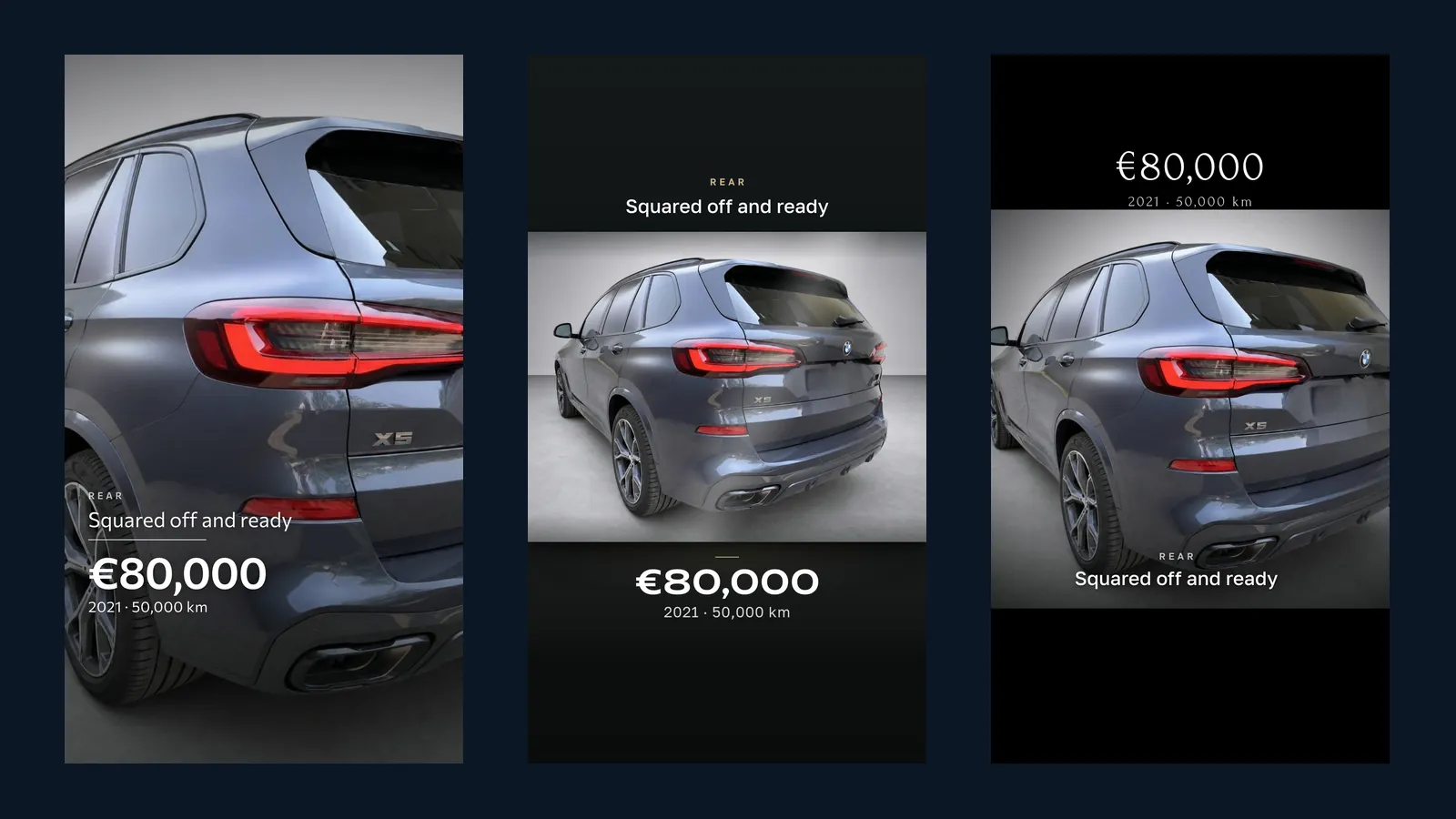
Put the price, year and mileage where buyers see them first, in the ad and in any video you share. A short silent vertical video with the price on screen lets buyers who scroll on a phone see straight away whether the car fits their budget. You can make one from the photos you already have: see how to turn listing photos into a vertical video.
Used car pricing checklist
- Ten or more comparable cars for sale found and written down
- Outliers (dealer cars, cars with major faults) left out
- A valuation tool used as a check, not as the asking price
- Price adjusted for mileage, faults, recent work and extras
- Walk-away price decided before the first call
- Asking price a little above the walk-away price, with the reason in the ad if it is above similar cars
- Response checked after one to two weeks; ad improved first, price cut in one step if needed
A clear, fair price gets the right buyers to call. Show it on screen with your listing photos in a short video made with AutoDash: make your first five videos free.